About the Joint Workshop
LEGAL 2026 and CALD-pseudo 2026
Date: 12th of May, 2026, 9:00-18:00
Location (room): Menorca 1 (floor 3, Palau de Congressos de Palma in Palma de Mallorca, Spain)
Proceedings: here
Access to text and speech data is essential for research, yet personal and sensitive information often prevents open sharing. Techniques such as pseudonymization and anonymization offer potential solutions, but their effectiveness, limitations, and impact on data utility require deeper investigation. Balancing privacy protection with meaningful scientific use remains a key challenge.
At the same time, legal and ethical requirements increasingly shape how language resources can be created, processed, and distributed. Regulatory frameworks, such as the GDPR, the Data Act, and the Artificial Intelligence Act, affect access, reuse, and documentation duties for both text and speech data, creating a complex environment that demands interdisciplinary insight.
The workshop brings these two perspectives together by addressing both the technical and practical aspects of de-identification as well as the legal and ethical obligations governing data handling. Topics include anonymization and pseudonymization methods, compliance in practical workflows, provenance and rights tracking, and emerging approaches to legal metadata. The goal is to foster responsible, legally sound, and technically robust innovation in human language technologies.
Contact
For inquiries, please contact ingo.siegert@ovgu.de for questions about LEGAL2026 or mormor.karl@svenska.gu.se for questions about CALD-pseudo 2026.
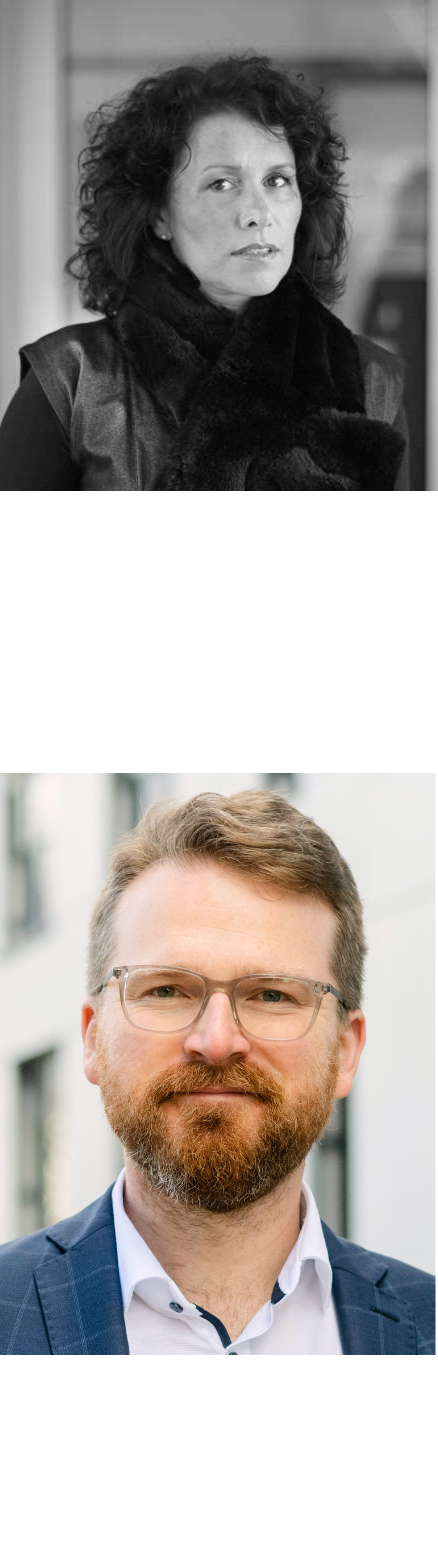
Keynote: Maja Bogataj Jančič (Open Data and Intellectual Property Institute ODIPI)
Dr Maja Bogataj Jančič is the founder and head of the Open Data and Intellectual Property Institute ODIPI. She has also been the head of the Institute for Intellectual Property (IPI) since its establishment in 2004. Maja is a copyright expert; her recent work focuses on open science, open data, data governance and artificial intelligence, as well as open science issues and the legal framework of copyright and data for research and science. Maja is the National Coordinator for Slovenia and the Regional Coordinator for the six Western Balkan countries of the Knowledge Rights 21 project. In 2020-2024, she co-chaired the Data Governance Working Group of The Global Partnership on Artificial Intelligence (GPAI).
Maja is a member of the Expert Council of the Slovenian Open Science Community (SSOZ) and the head of the newly established Expert Body for Legal Issues Related to Copyright and Data Governance. She is a a member of the Advisory Committee on Copyright and other Legal Matters (CLM) of the International Federation of Library Associations and Institutions (IFLA). Maja is a president of the supervisory board of the National and University Library (NUK). She is a Senior Research Fellow at the Centre on Knowledge Governance. She is a Vice President of COMMUNIA. She Creative Commons Slovenia since 2003.
Maja graduated from the Faculty of Law in Ljubljana (1996), obtained her LL.M. from the Faculty of Law in Ljubljana (1999, Economics), Harvard Law School (2000, Law) and Facoltà di Giurisprudenza di Torino (2005, Intellectual Property), and her Ph.D. from the Faculty of Law in Ljubljana (2006, Copyright).
Invited Talk: Prof. Dr. Ivan Habernal (Ruhr University Bochum, Germany)
Abstract:
Privacy and anonymization in NLP: Are we barking up the wrong tree? LLMs dominate the world, they are claimed to be the mightiest privacy destroyers, and no anonymized text can escape their capabilities. That’s for sure, but maybe we are barking up the wrong tree. What if our attacks on privacy are flawed? What if we overstate our privacy attack strengths? What if we never defined privacy, anonymity, anonymization, and attackers in the first place? In this talk, I’ll try to address the elephant in the room, both from an empirical and theoretical perspective.
Bio:
Prof. Ivan Habernal holds a full professorship of trustworthy human language technologies at the Ruhr-University Bochum, Germany, and is affiliated with the Research Center for Trustworthy Data Science and Security. Before that, he held academic positions at University of Paderborn, Ludwig Maximilian University of Munich, and Technical University of Darmstadt. His research group focuses on privacy-preserving methods in natural language processing and on legal natural language processing. He's been an active member of the NLP community by serving as an editor of TACL or ARR, an has co-organized the series of the PrivateNLP workshops co-located with the major ACL conferences over the last few years.
Submission
Authors are invited to submit original and unpublished research papers in the following categories:
Long papers (up to 8 pages) for substantial contributions
Short papers (up to 4 pages) for:
- Small, focused contributions or ongoing or preliminary work
- Extended abstracts for non-technical submissions only, such as conceptual, theoretical, legal, ethical, policy-oriented, or position papers. Extended abstract submissions are expected to be developed into regular papers by the camera-ready submission deadline.
The full papers will be published as workshop proceedings along with the LREC main conference. They should follow the LREC stylesheet, which is available on the conference website on the Author’s kit page. Unlike the main conference, we allow appendices of up to 10 pages already in the review phase. However, the reviewers will not be required to look in the appendices and must be able to review the paper based on everything contained within the main body of the paper (as if there were no appendices).
Submission deadline: 20th of February 2026
Submission link: https://softconf.com/lrec2026/LEGAL2026/
When submitting a paper from the START page, authors will be asked to provide essential information about resources (in a broad sense, i.e. also technologies, standards, evaluation kits, etc.) that have been used for the work described in the paper or are a new result of your research. Moreover, ELRA encourages all LREC authors to share the described LRs (data, tools, services, etc.) to enable their reuse and replicability of experiments (including evaluation ones).
Topics of interest include:
1. Legal Aspects of Language Data (LEGAL2026)
-
Regulatory frameworks and global governance: Impact of the GDPR, EU Data Act, Data Governance Act, Digital Services Act, AI Act, and international regulations (e.g., China’s 2023 Draft Rules on Generative AI, U.S. AI Bill of Rights) on access, circulation, and reuse of language and speech data; statutory exceptions for text and data mining.
-
Intellectual property, data protection, and LLM governance: Legal issues surrounding training data, derivative datasets, and model outputs; copyright, data governance, and data protection obligations in the development and deployment of Large Language Models.
-
Ethics, fairness, trust, and transparency: Ethical considerations in personal data collection and reuse; ensuring fairness, transparency, and accountability in language and speech technologies.
-
Compliance in practice: Legal metadata, provenance, consent documentation, usage rights, and machine-readable licensing; practical workflows for lawful data collection, annotation, and sharing.
-
Operationalizing compliance: Tools and methods that support automated compliance checking, risk detection, consent tracking, and policy-aware data filtering; language technologies assisting in legal compliance.
-
Emerging and grey areas: Legal uncertainties around synthetic or augmented data, LLM-generated content, and cross-modal leakage; evolving interpretations of anonymization thresholds.
-
Interdisciplinary and cross-border coordination: Global harmonization of legal and technical approaches; collaboration models between researchers, legal experts, and infrastructure providers; navigating jurisdictional inconsistencies.
2. Pseudonymization, Anonymization, and De-identification: Theoretical, Methodological, and Technical Aspects (CALD-pseudo 2026)
-
Detection and classification of personal information (PI): Automatic identification of PI in text, speech, and multimodal data; context-dependent and indirect indicators of identity.
-
Replacement and transformation of PI: Context-sensitive pseudonymization and anonymization methods; substitution, masking, obfuscation; maintaining coherence across discourse and modalities.
-
Utility and bias after de-identification: Effects of de-identification on downstream task performance, linguistic research validity, readability, and bias amplification or reduction.
-
Approaches to evaluation and adversarial testing: Metrics and frameworks for assessing de-identification quality; adversarial re-identification attempts; robustness and failure-mode analysis.
-
Dataset creation for de-identification research: Methodological, ethical, and annotation-related considerations in building corpora for training or evaluating de-identification systems.
-
Low-resource scenarios: Techniques for de-identification in settings with limited data, scarce annotations, or underrepresented languages; transfer and multilingual approaches.
-
Speech-specific challenges: Removing speaker identity cues in audio; voice anonymization; cross-modal leakage between text, transcripts, and acoustic features.
-
Cross-disciplinary applications and challenges: Integrating de-identification techniques into real-world workflows in areas such as linguistics, social sciences, digital humanities, healthcare, and other private- or public-sector data environments.
Important Dates
Deadline for submission
Notification of acceptance
Submission of final version of accepted papers (strict)
Workshop day
Progam
| 9:00 - 10:10 | Welcome Session |
| 9:00 - 9:15 |
Welcome and basic information from the organizers
Workshop Organizers |
| 9:15 - 10:10 |
Introductory Lecture
Paweł Kamocki |
| 10:10 - 10:30 | Oral Presentations I: LEGAL |
| 10:10 - 10:30 |
Transparency as Architecture: Structural Compliance Gaps in EU AI Act Article 50 II
Vera Schmitt1, Niklas Kruse2, Premtim Sahitaj3, Julius Schöning2 1TU Berlin, 2Hochschule Osnabrück, 3Technical University of Berlin |
| 10:30 - 11:00 | Coffee Break |
| 11:00 - 11:55 | Keynote |
| 11:00 - 11:55 |
Keynote Speech
Maja Bogataj Jančič |
| 11:55 - 13:00 | Oral Presentations II: LEGAL |
| 11:55 - 12:15 |
Towards Robust Evaluation for Privacy QA Systems
Anna Leschanowsky1, Zahra Kolagar1, Erion Çano2, Ivan Habernal2, Dara Hallinan3, Emanuël Habets3, Birgit Popp1 1Fraunhofer IIS, 2Ruhr-University Bochum, 3FIZ Karlsruhe – Leibniz Institute for Information Infrastructure, 5International Audio Laboratories Erlangen |
| 12:15 - 12:35 |
LDS Contractual Framework: Principles, Status and Implementation
Penny Labropoulou1, Kossay Talmoudi2, Dimitrios Gkoumas3, Katerina Gkirtzou4, Miltos Deligiannis1, Leon Voukoutis1, Athanasia Kolovou1, Khalid Choukri5, Stelios Piperidis6, Dimitrios Galanis7 1ILSP / Athena RC, 2ELDA, 3Institute for Language and Speech Processing (ILSP), Athena Research Center (ATHENA RC), 4ILSP/Athena Research Center, 5ELRA/ELDA, 6Athena RC/ILSP, 7Institute for Language and Speech Processing, Athena Research Center |
| 12:35 - 12:55 |
Authorship Attribution in the Times of LLMs within the Framework of the CRediT Taxonomy
Pawel Kamocki1 and Andreas Witt2 1Leibniz Institute for German Language, 2Leibniz Institute for the German Language |
| 13:00 - 14:00 | Lunch Break |
| 14:00 - 14:55 | Invited Talk |
| 14:00 - 14:55 |
Privacy and anonymization in NLP: Are we barking up the wrong tree?
Prof. Dr. Ivan Habernal |
| 14:55 - 16:00 | Oral Presentations III: CALD-pseudo |
| 14:55 - 15:15 |
DeID-Clinic: A Risk-Aware Pseudonymization Framework for Clinical Text De-identification and Re-identification Risk Assessment
Angel Paul1, Dhivin Shaji1, Lifeng Han2, Warren Del-Pinto1, Goran Nenadic1, Suzan Verberne3 1University of Manchester, 2The University of Manchester, 3LIACS, Leiden University |
| 15:15 - 15:35 |
Distilling Human-Aligned Privacy Sensitivity Assessment from Large Language Models
Gabriel Loiseau1, Damien Sileo1, Damien Riquet2, Maxime Meyer2, Marc Tommasi3 1Inria, 2Hornetsecurity, 3Lille University |
| 15:35 - 15:55 |
Birds of a Feather: Do Embedding Representations of Personal Information Flock Together?
Maria Irena Szawerna and Simon Dobnik University of Gothenburg |
| 16:00 - 16:30 | Coffee Break |
| 16:30 - 17:45 | Poster Session |
| 16:30 - 17:45 |
Modelling Legal Compliance in a Consent Wizard Application as Part of a Research-Centered and User-Oriented Data Infrastructure
Aliena Strathmann1, Marc-Levin Joppek1, Maryam Mohammadi1, Katja Politt2, Paul T. Schrader1, Annett B. Jorschick1, Hendrik Buschmeier1 1Bielefeld University, 2Rostock University |
| 16:30 - 17:45 |
Balancing FAIR and GDPR: A Governance Framework for Oral Archives
Elvira Mercatanti1, Monica Monachini2, Giovanni Abete3, Silvia Calamai4, Sergio Canazza5, Alessandro Casellato6, Virginia Niri4, Cesarina Vecchia3, Giulia Zitelli Conti6, Giada Zuccolo5 1CNR-ILC, 2Institute of Computational Linguistics "A. Zampolli" - CNR, 3Università degli Studi di Napoli Federico II, Italia, 4Università degli Studi di Siena, Italia, 5Università degli Studi di Padova, Italia, 6Università Ca' Foscari Venezia, Italia |
| 16:30 - 17:45 |
Legal Considerations in the Use of Synthetic Data for AI Development and Finetuning: The Case of LLMs4EU
Kossay Talmoudi1, Khalid Choukri2, Amélie Gourgeot1, Florine Astruc3 1ELDA, 2ELRA/ELDA, 3ELT-EDIC |
| 16:30 - 17:45 |
Evaluating Encoder- and LLM-Based Approaches for Robust Indirect Personal Identifier Detection
Christoph Otto1, Ibrahim Baroud2, Akiko Aizawa3, Sebastian Möller4, Roland Roller5, Lisa Raithel6 1University of Potsdam, 2Technische Universität Berlin, 3National Institute of Informatics, 4Quality and Usability Lab, TU Berlin, 5DFKI SLT Lab, 6Technische Universitaet Berlin, BIFOLD, DFKI GmbH, Charité-IKIM |
| 16:30 - 17:45 |
VEIL: A Benchmark for Value-Preserving Entity Identification Limitation
Darina Gold1, Shadi Rastegar1, Alina Liebel1, Alessandra Zarcone2 1Fraunhofer IIS, 2Technische Hochschule Augsburg |
| 17:45 - 18:00 | Closing Session |
| 17:45 - 18:00 |
Closing Remarks
Workshop Organizers |
Organizers and Contact of the LEGAL Workshop:
Ingo Siegert, Otto-von-Guericke-Universität Magdeburg, Germany
Kossay Talmoudi, ELRA/ELDA, France
Khalid Choukri, ELRA/ELDA, France
Pawel Kamocki, IDS Mannheim, Germany
Organizers and Contact of the CALD-pseudo Workshop:
Maria Irena Szawerna, University of Gothenburg, Sweden
Simon Dobnik, University of Gothenburg, Sweden
Therese Lindström Tiedemann, University of Helsinki, Finland
Pierre Lison, Norwegian Computing Center & University of Oslo, Norway
Ildikó Pilán, Norwegian Computing Center, Norway
Ricardo Muñoz Sánchez, University of Gothenburg, Sweden
Lisa Södergård, University of Helsinki, Finland
Elena Volodina, University of Gothenburg, Sweden
Xuan-Son Vu, Lund University, Sweden
Program Committee
Khalid Choukri
Claudia Cevenini
Erik Ketzan
Prodromos Tsiavos
Andreas Witt
Paweł Kamocki
Kim Nayyer
Krister Lindèn
Ingo Siegert
Catherine Jasserand
Isabel Trancoso
Henrik Bushschmeier
Annett Jorschick
Lars Ahrenberg
Terhi Ainiala
Emilia Aldrin
Lucas Georges Gabriel Charpentier
Simon Dobnik
Emilie Francis
Linnea Gustafsson
Ivan Habernal
Udo Hahn
Aron Henriksson
Nikolai Ilinykh
Dimitrios Kokkinakis
Herb Lange
Tomas Lehecka
Therese Lindström Tiedemann
Pierre Lison
Peter Ljunglöf
Ricardo Muñoz Sánchez
Ildikó Pilán
Tatjana Scheffler
Maria Irena Szawerna
Lisa Södergård
Vicenç Torra
Thomas Vakili
Shubham Vatsal
Elena Volodina
Xuan-Son Vu
Jan-Ola Östman